

RETHINKING DESIGN SUCCESS
What you need to know about the future of excellent buildings.
For generations, buildings have been often recognized for their beauty, originality, craftsmanship, technical innovation, operational performance, and efficient use of space. Yet over time, even some of the most celebrated buildings revealed unintended shortcomings: housing optimized for density and code compliance but lacking opportunities for community, beautiful museums that overwhelmed visitors, and highly efficient workplaces that inadvertently contributed to burnout.
In an effort to bring human impact to the center of the design conversation, the profession is now asking a more ambitious question:
What if the true measure of architecture and interior design isn't only how buildings look and perform, but what they enable people to experience and become?
This question sits at the heart of the American Institute of Architects' (AIA) Framework for Design Excellence. Introduced in 2019 following the adoption of the AIA Resolution for Urgent and Sustained Climate Action, the Framework represents a systemic shift in how design excellence is evaluated. It challenges architects and interior designers to consider climate resilience, social equity, and human well-being alongside beauty, function, performance, and economic value.
For the AIA, how we design must be inseparable from how we care for the planet and for people.
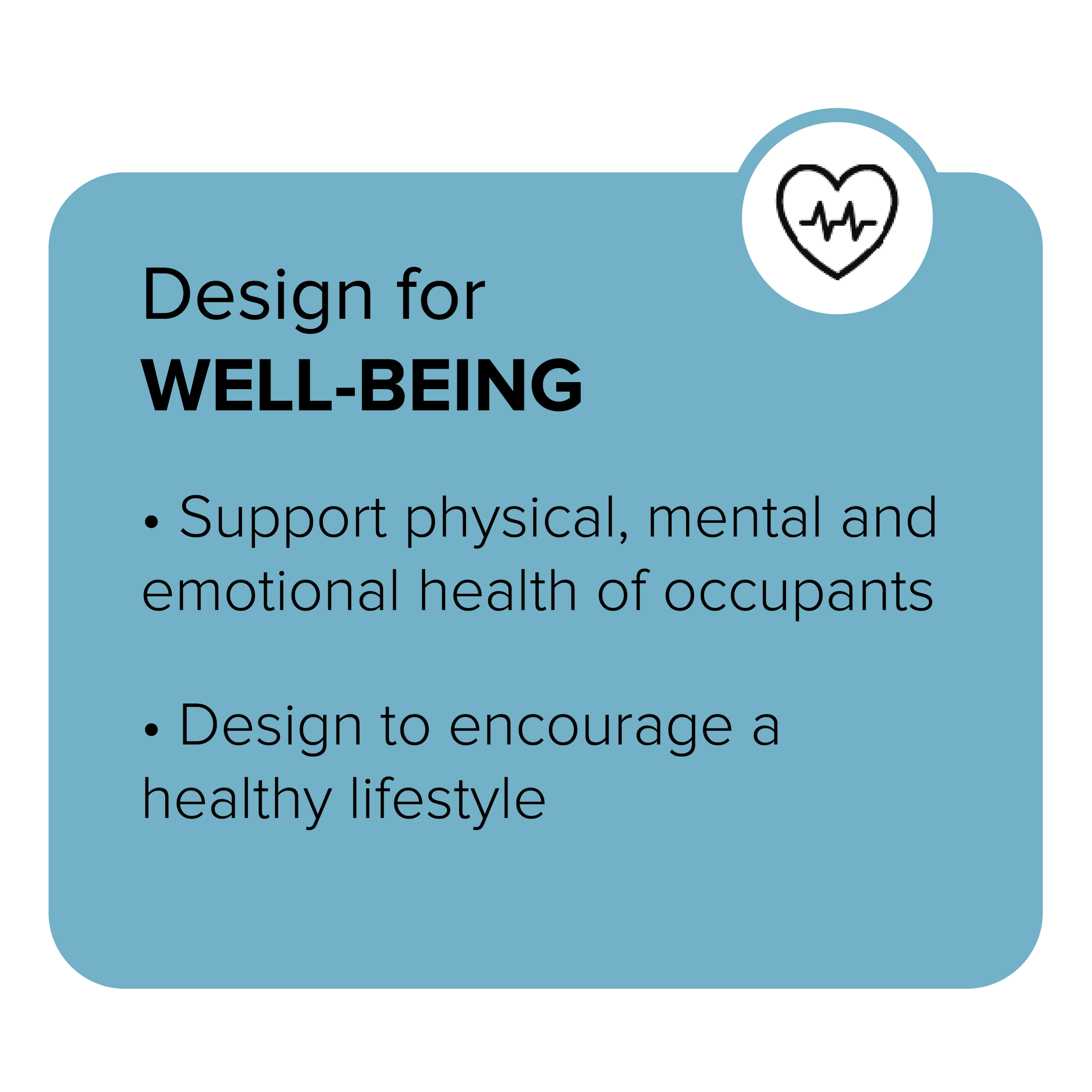
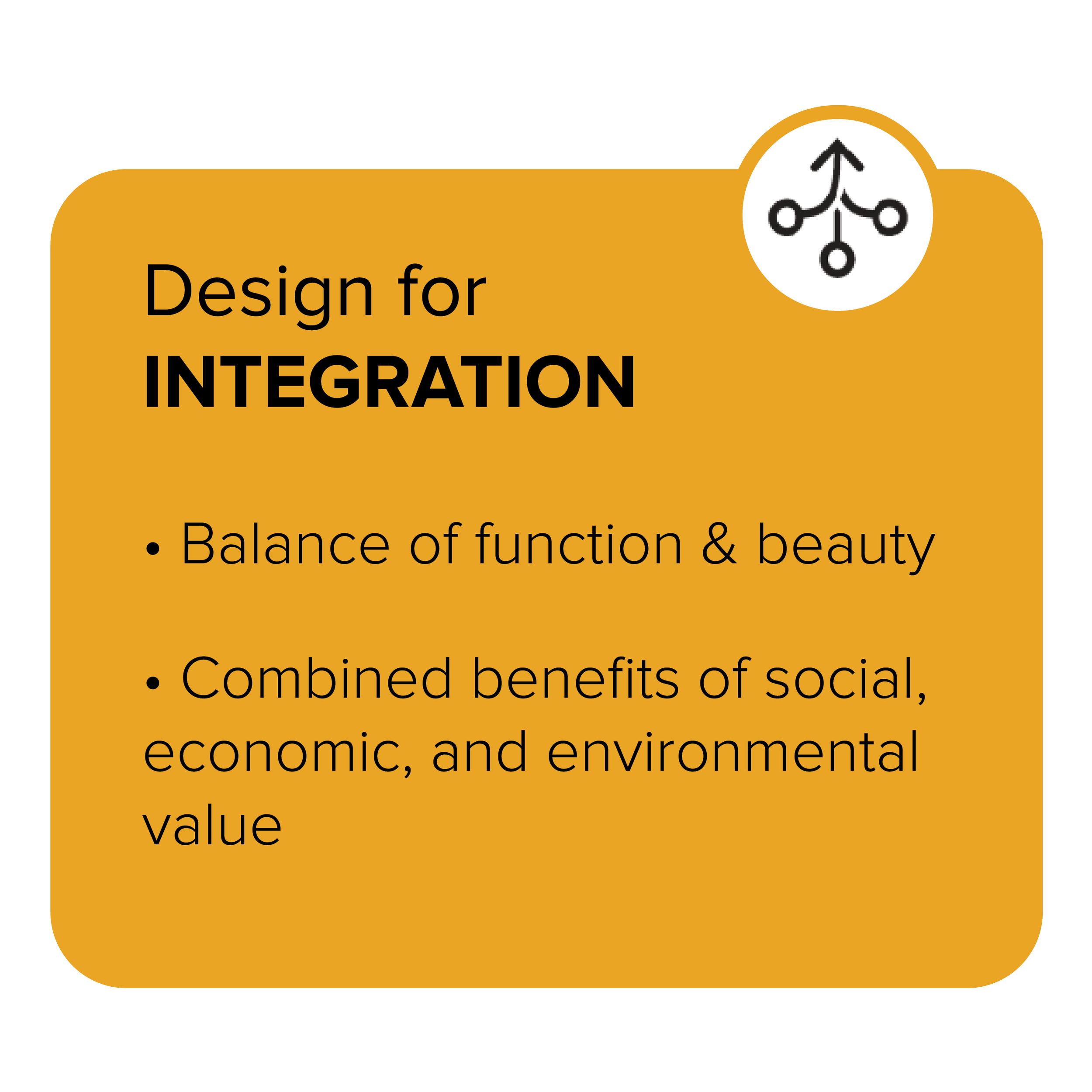
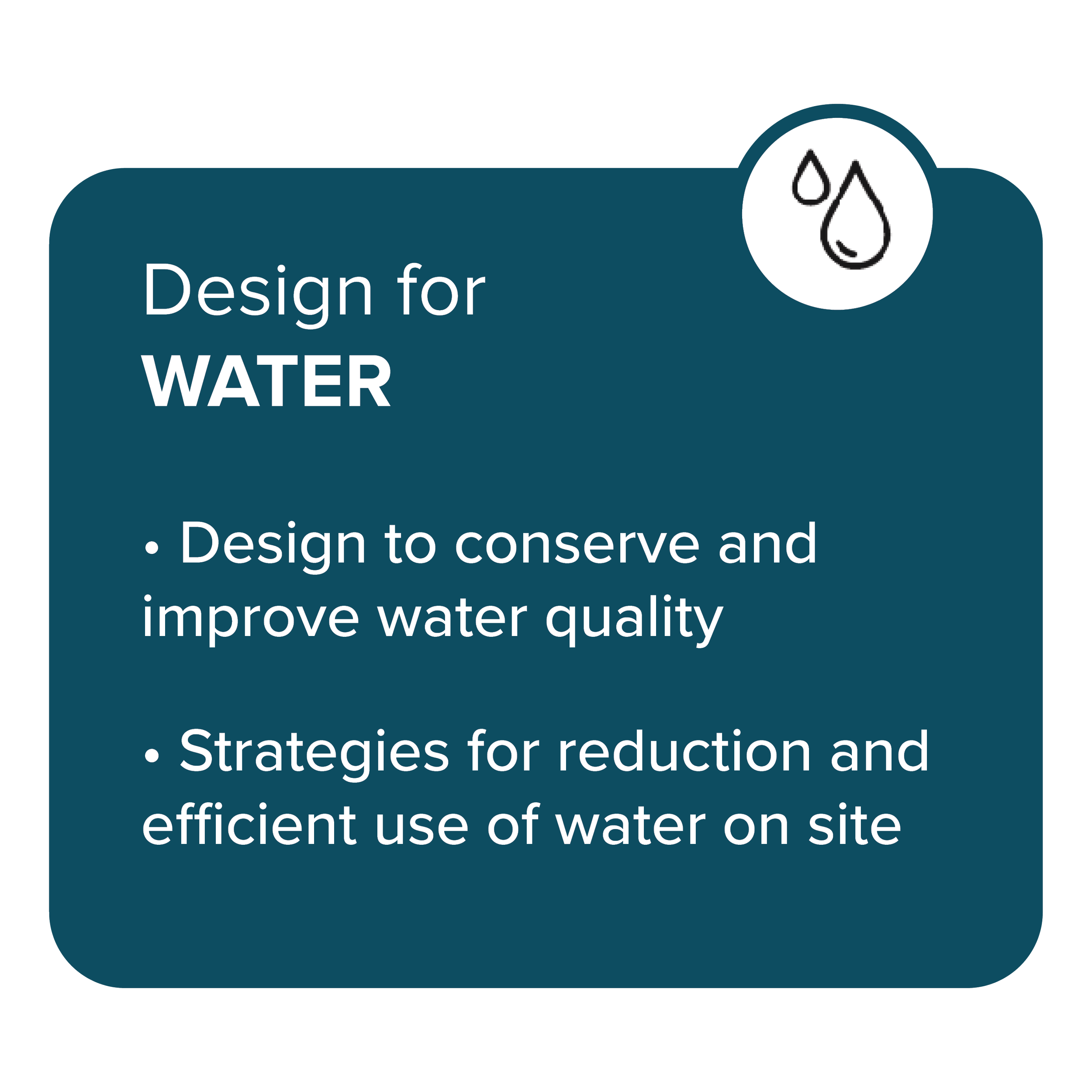
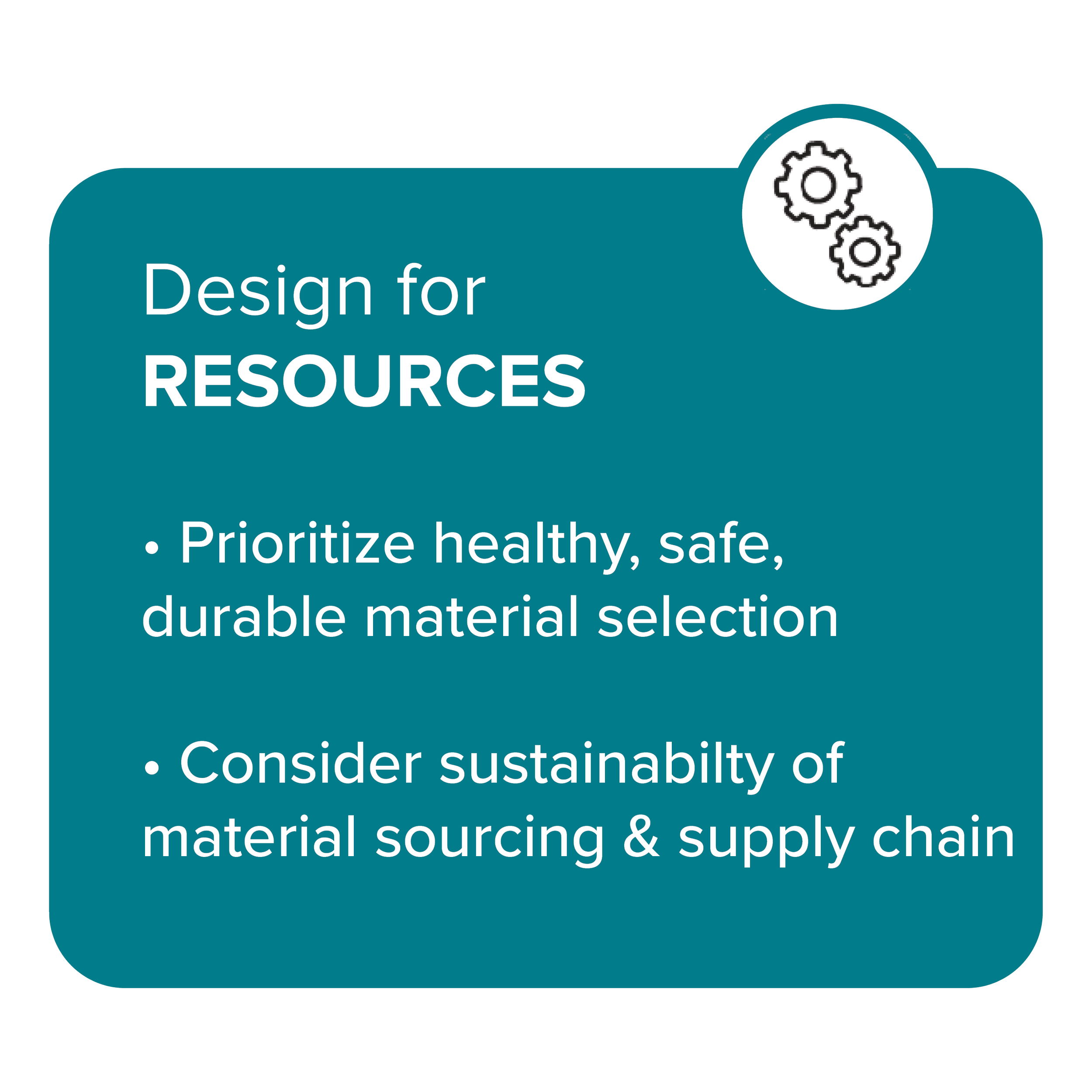
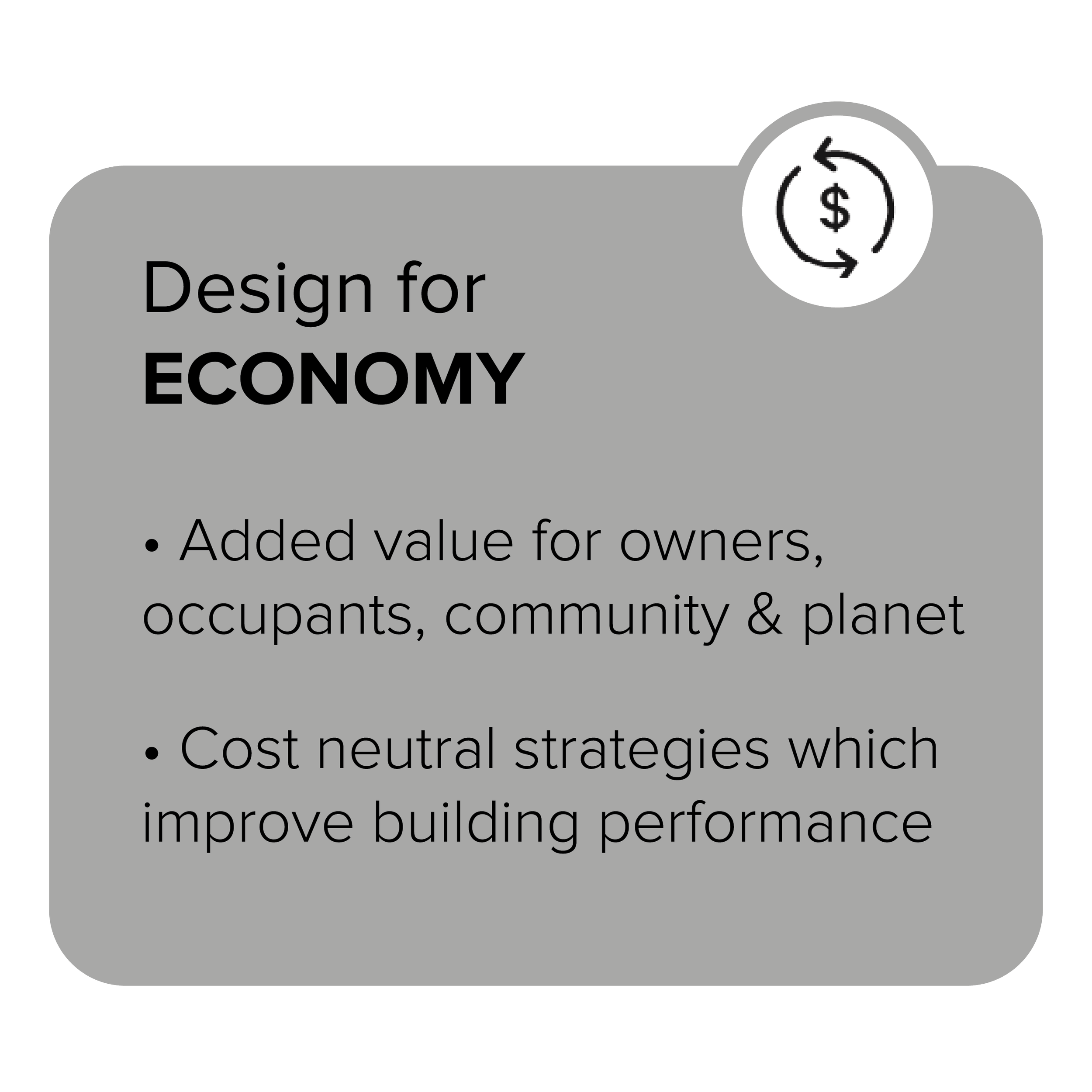
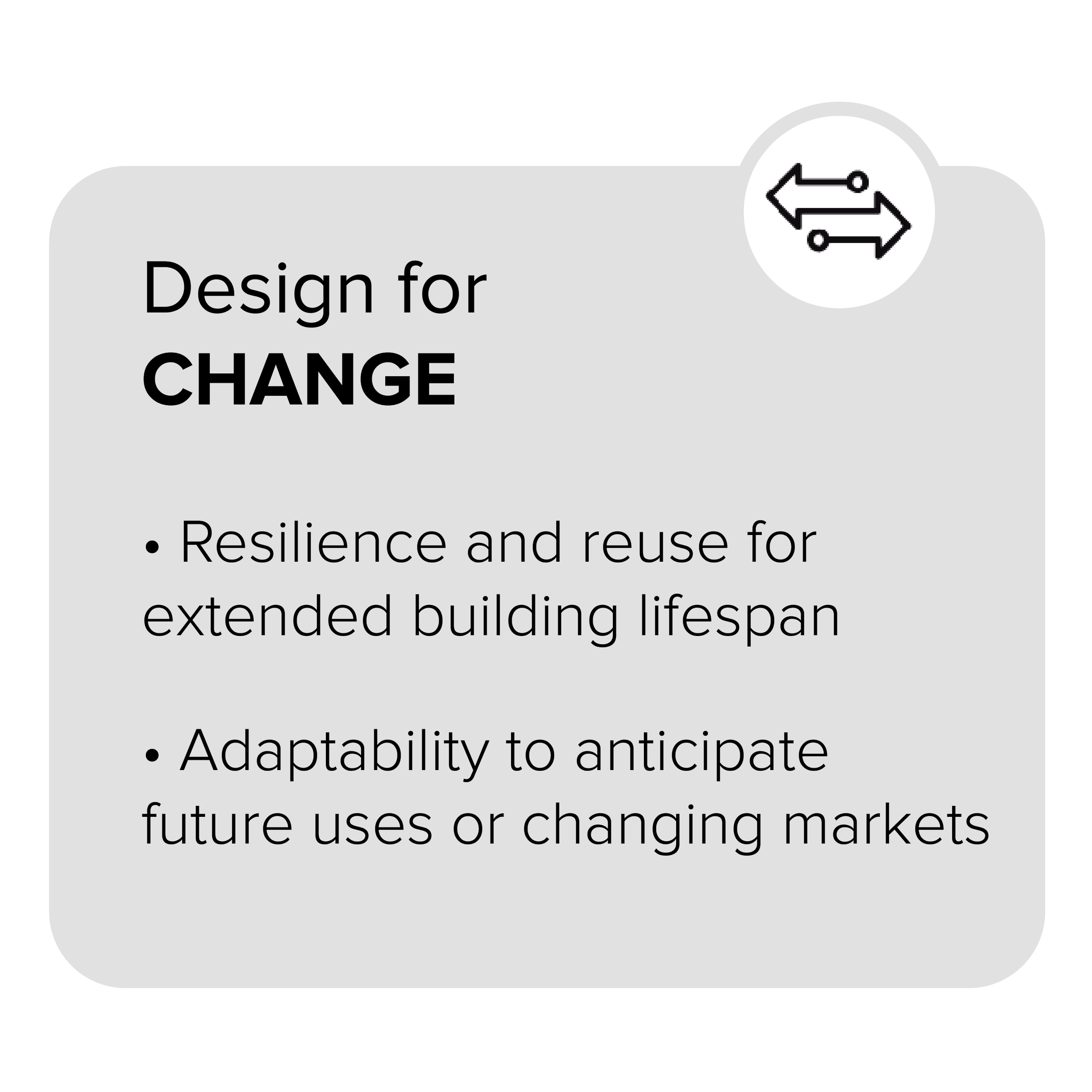
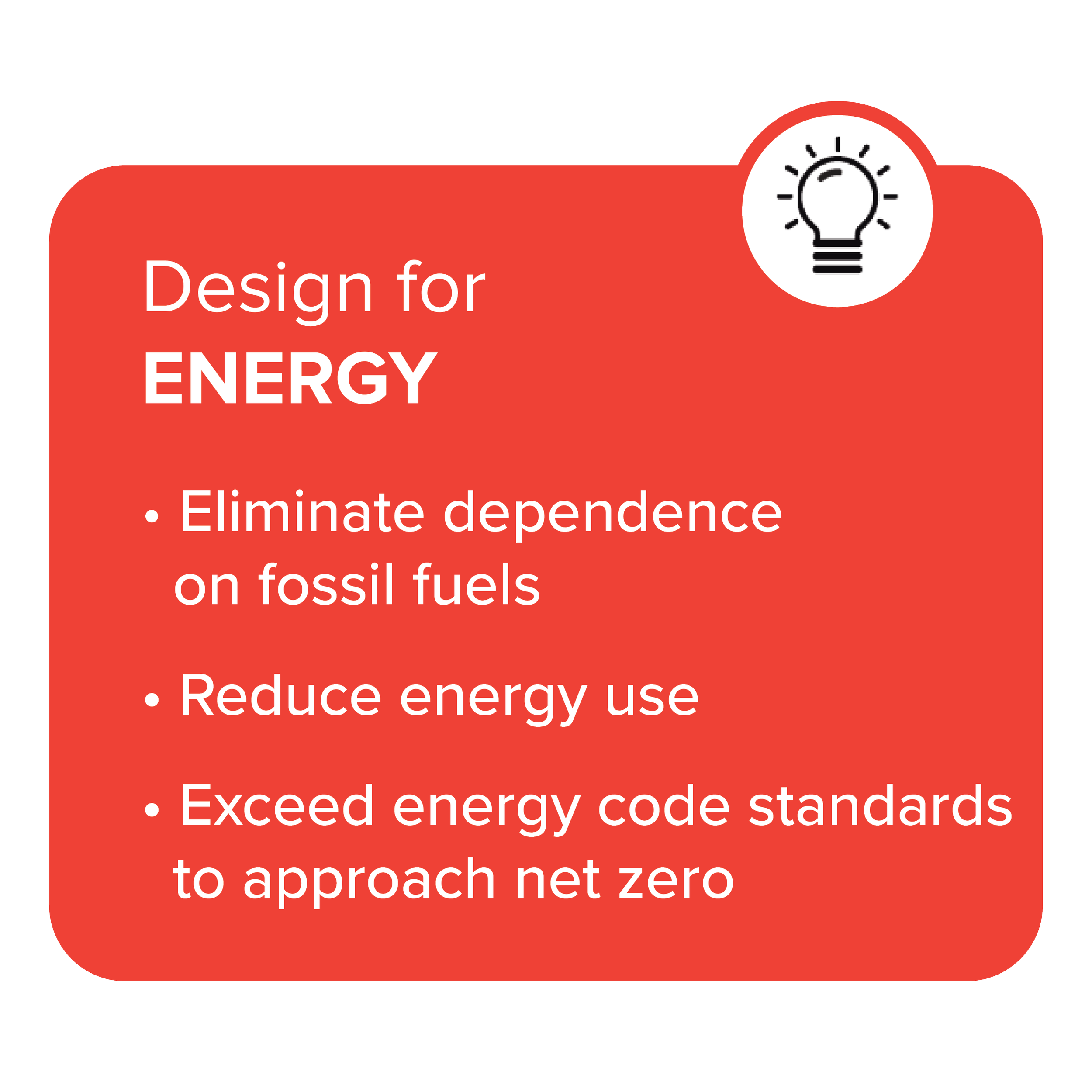
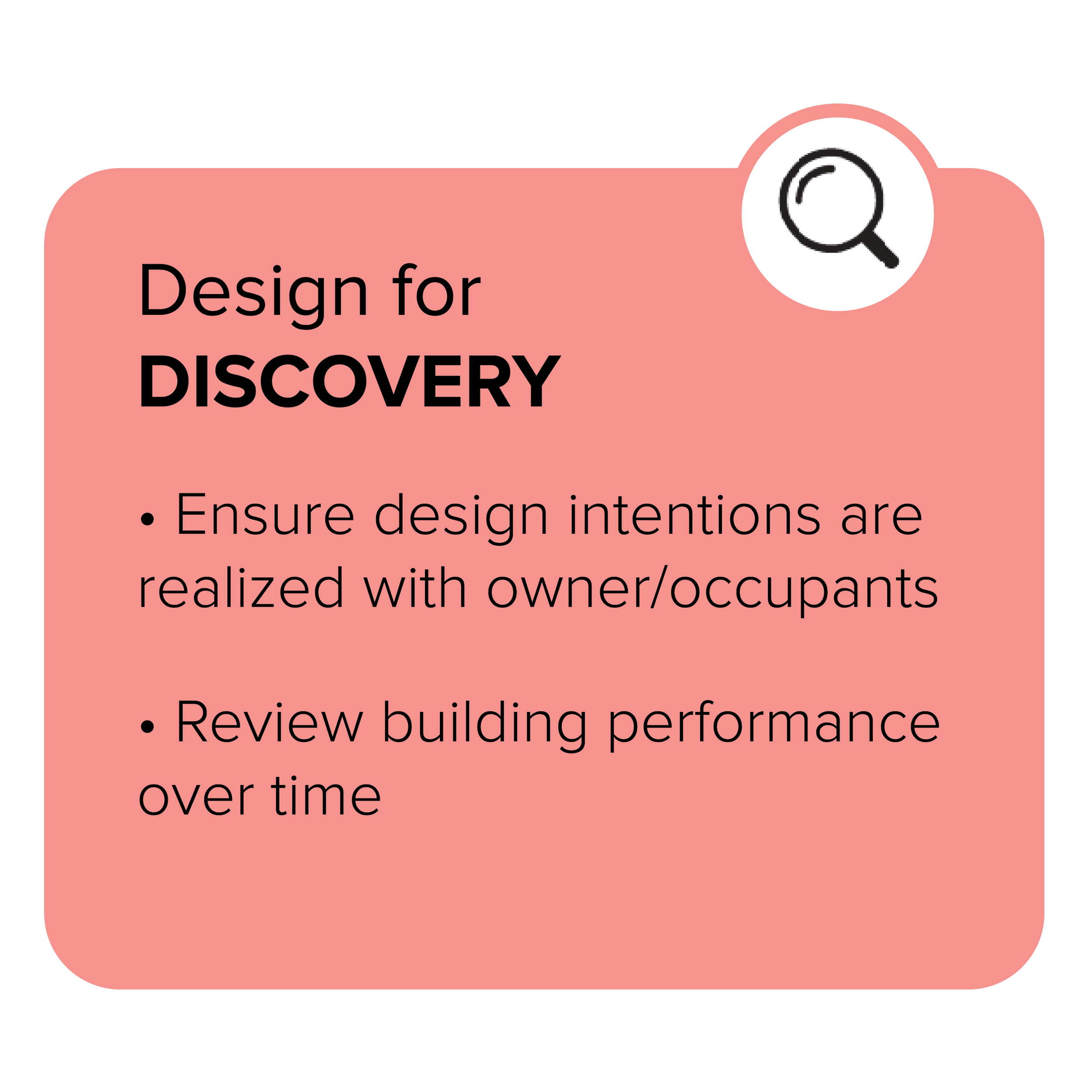
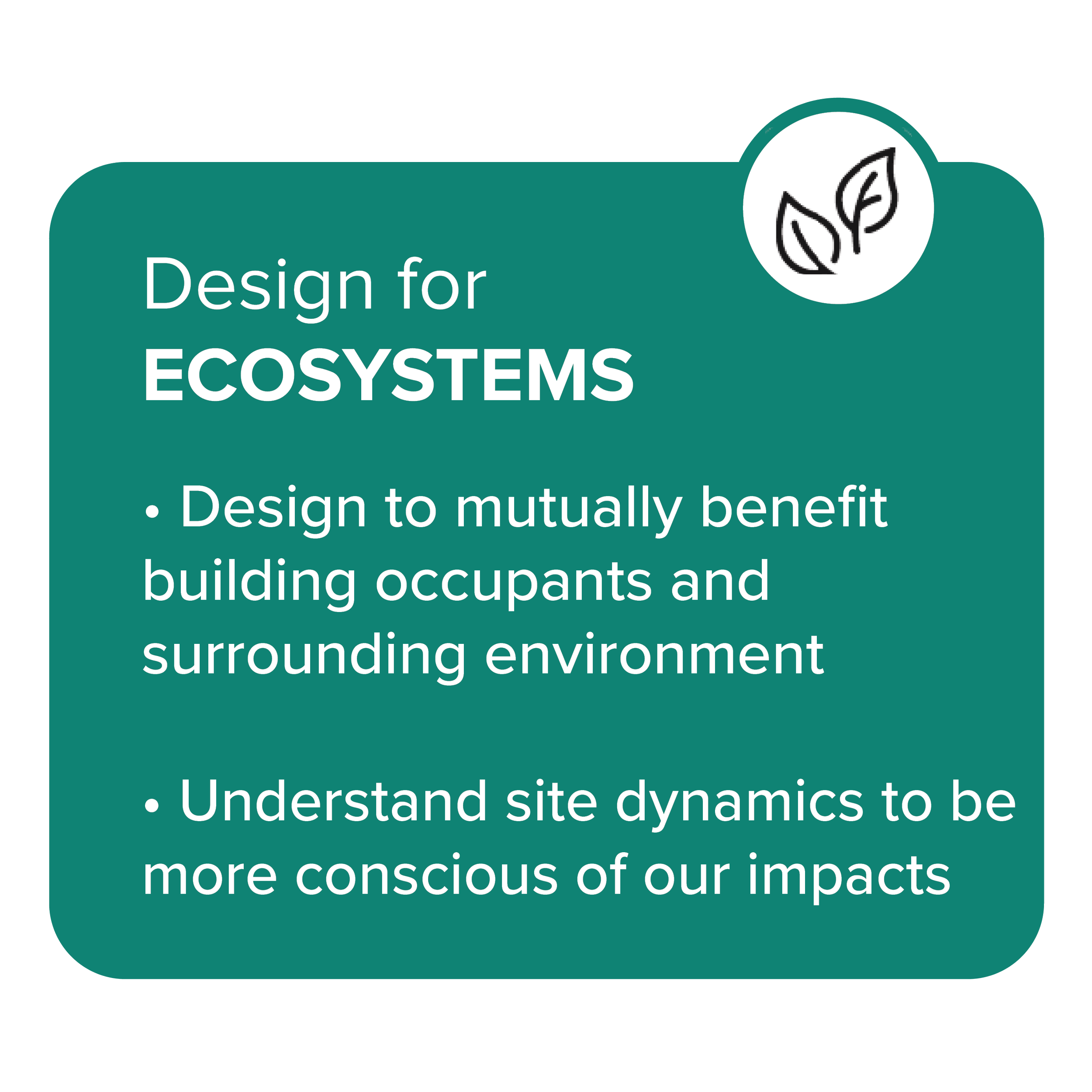
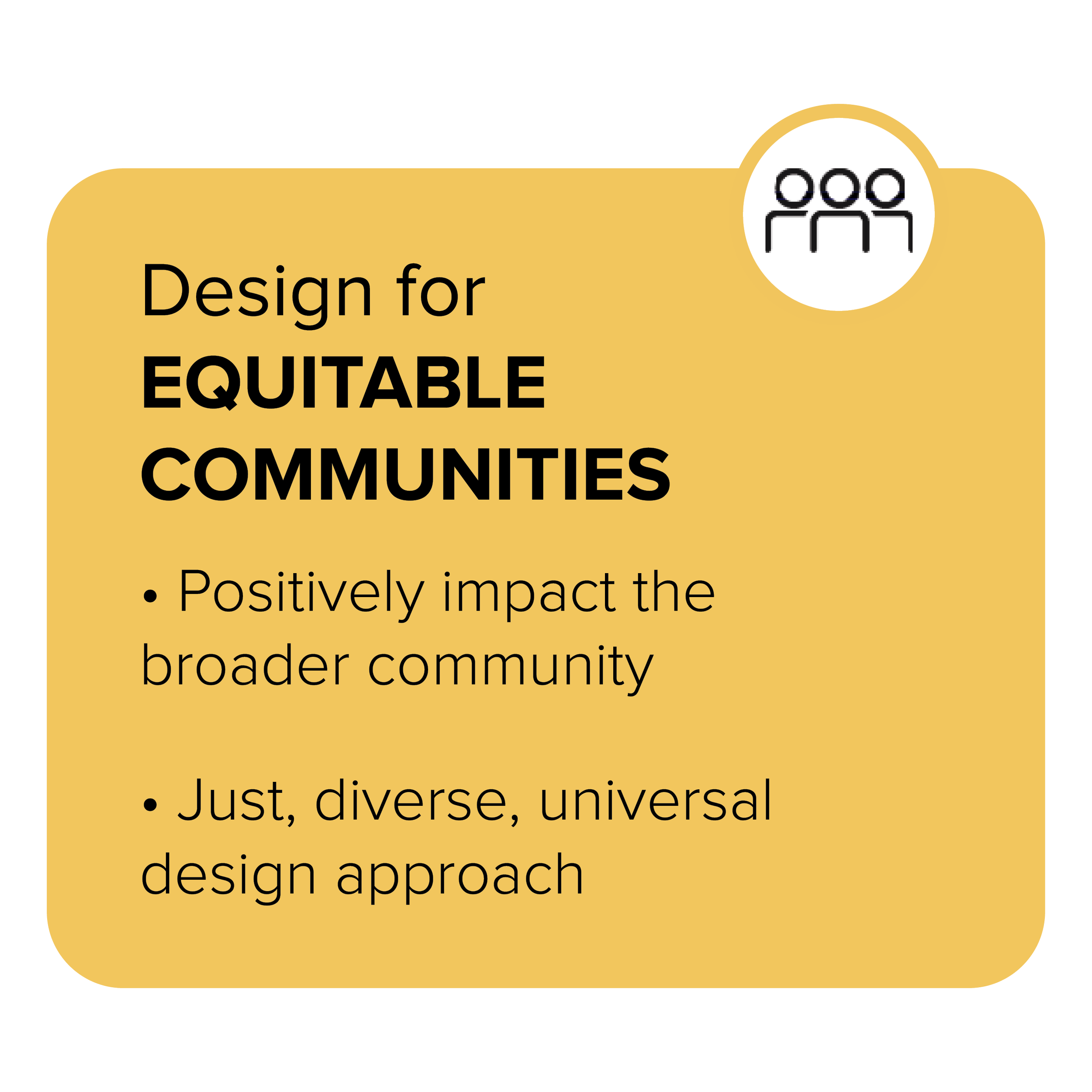
AIA Framework for Design Excellence and its 10 Measures
The environmental imperative is easy to understand. The building sector accounts for a significant share of global carbon emissions, and the profession has a critical role to play in reducing its impact. Likewise, growing awareness of equity has challenged architects and interior designers to design places that serve broader and more diverse communities.
But perhaps the most revealing shift is behavioral. In 2023, the U.S. Surgeon General declared loneliness and social isolation a public health epidemic, warning that a lack of social connection carries health risks comparable to smoking 15 cigarettes a day. Social isolation has been linked to a 29% higher risk of premature death, a 29% increased risk of heart disease, a 32% higher risk of stroke, and an approximately 50% greater risk of developing dementia.
If the spaces we design can either encourage, or discourage, human connection, then architecture and interior design has a much larger role to play than simply providing shelter, comfort, or efficiency.
From Shelter to Human Flourishing
Architecture and interior design has always evolved alongside society's expectations. Initially, buildings protected us from the elements and provided storage. Later, they pursued proportion and beauty to communicate harmony, order, and hierarchy in places of worship and civic life. The modern era prioritized function and efficiency, making well-designed spaces more accessible to everyday life, while recent decades introduced measurable sustainability performance through energy efficiency, indoor air quality, and healthier materials.
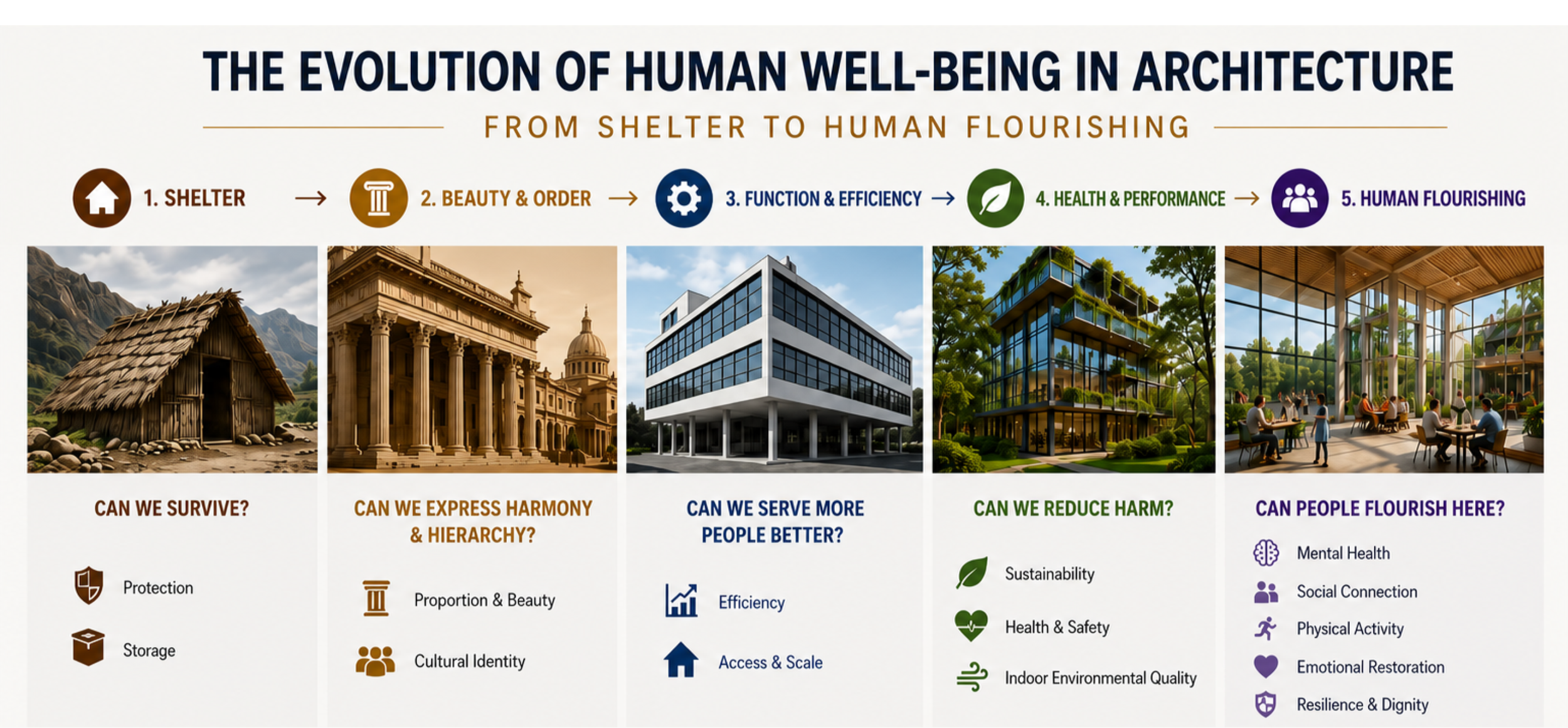
BAR Infographic
Architects and interior designers have continuously woven society's evolving needs into the design process, developing new solutions to address emerging challenges. Today, the profession is once again being asked to expand its perspective, drawing on research from public health, environmental psychology, and neuroscience that demonstrates how the built environment directly influences stress, learning, healing, social connection, and even cognitive performance.
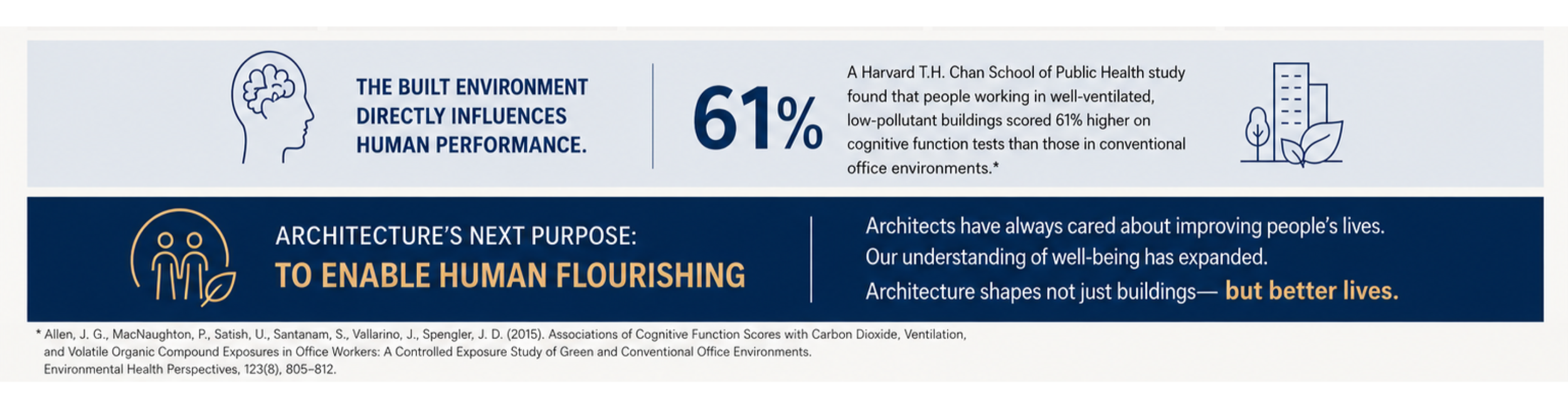
A Harvard T.H. Chan School of Public Health study found that people working in well-ventilated, low-pollutant buildings scored 61% higher on cognitive function tests - including crisis response, strategy, and information usage - than those in conventional office environments, demonstrating the measurable impact of building design on human performance.
Architects have always cared about improving people’s lives. What has fundamentally changed is our understanding of what it means to support human well-being.
“Beyond comfort, aesthetics, and performance, design is now expected to actively support mental health, emotional restoration, dignity, physical activity, social connection, and resilience.”
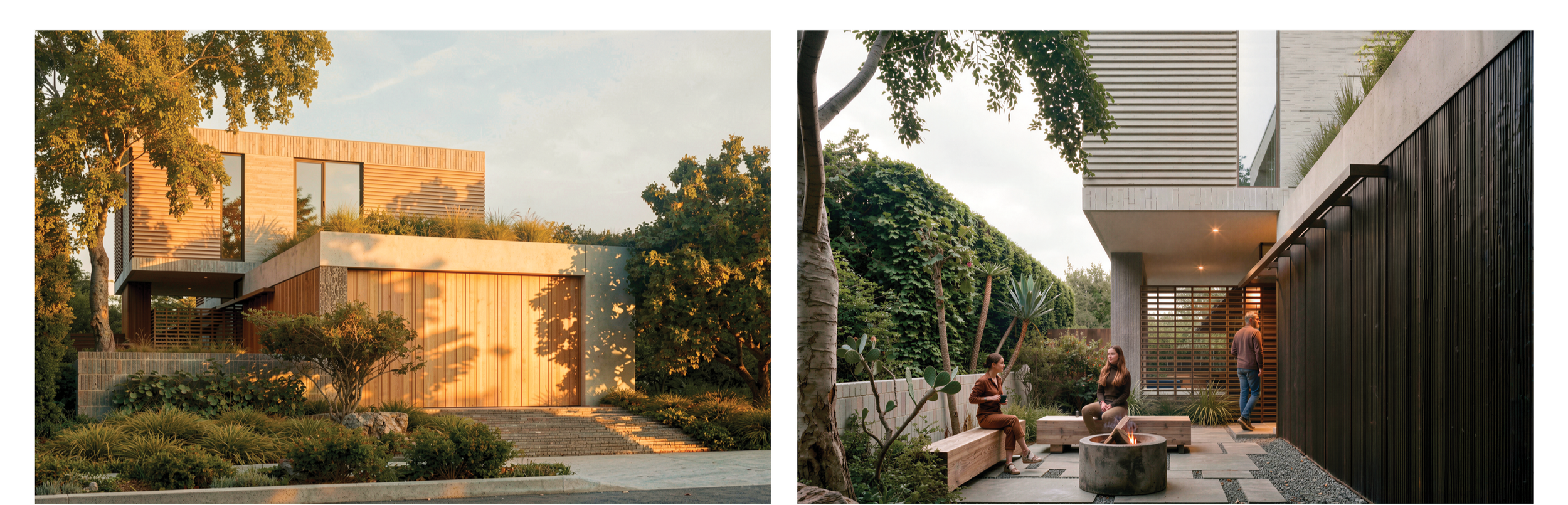
BAR’s Case Study 2.0, part of a post-fire rebuilding program in Pacific Palisades, CA, proposes a front terrace that expands the home’s usable outdoor space, softening the boundaries between private and public space to encourage social interaction, provide eyes on the street, and strengthen neighborhood safety.
Questions such as "How many square feet does this room require?" are increasingly accompanied by "What behaviors should this space encourage?" The building becomes a catalyst for healthier living.
The AIA Framework wasn't created because architects and interior designers forgot how to design exceptional buildings. It emerged because the profession recognized that its definition of excellence had become too narrow for the challenges - and opportunities - of today's world.
The New Toolkit for Designing Well-being
As our understanding of human experience evolves, so do the disciplines informing architecture.
The AIA Framework is one of several leading resources advancing this conversation. Health-focused standards such as Fitwel and WELL bring additional research and measurable strategies into the design process, helping architects and interior designers evaluate how decisions around movement, social connection, air quality, light, comfort, nourishment, and other aspects of the built environment can influence human health and well-being.
Biophilic design strengthens our connection to nature through daylight, vegetation, natural materials, water, and seasonal change. Neuroinclusive design considers a broader range of cognitive and sensory experiences, creating environments that feel more intuitive, welcoming, and accessible to people with diverse abilities and ways of processing the world. Behavioral design encourages healthier habits through intuitive circulation, inviting stairways, and spaces that naturally promote movement and active lifestyles. Social design fosters belonging and human connection by creating places that encourage interaction, support community, and bring people together through shared experiences.
Rather than relying on any single framework, our studios at BAR, reference the research of psychologists, neuroscientists, behavioral scientists, public health experts, and environmental specialists to better understand how the built environment shapes everyday life. This interdisciplinary knowledge has introduced a new generation of design strategies that extend beyond traditional measures of sustainability and performance.
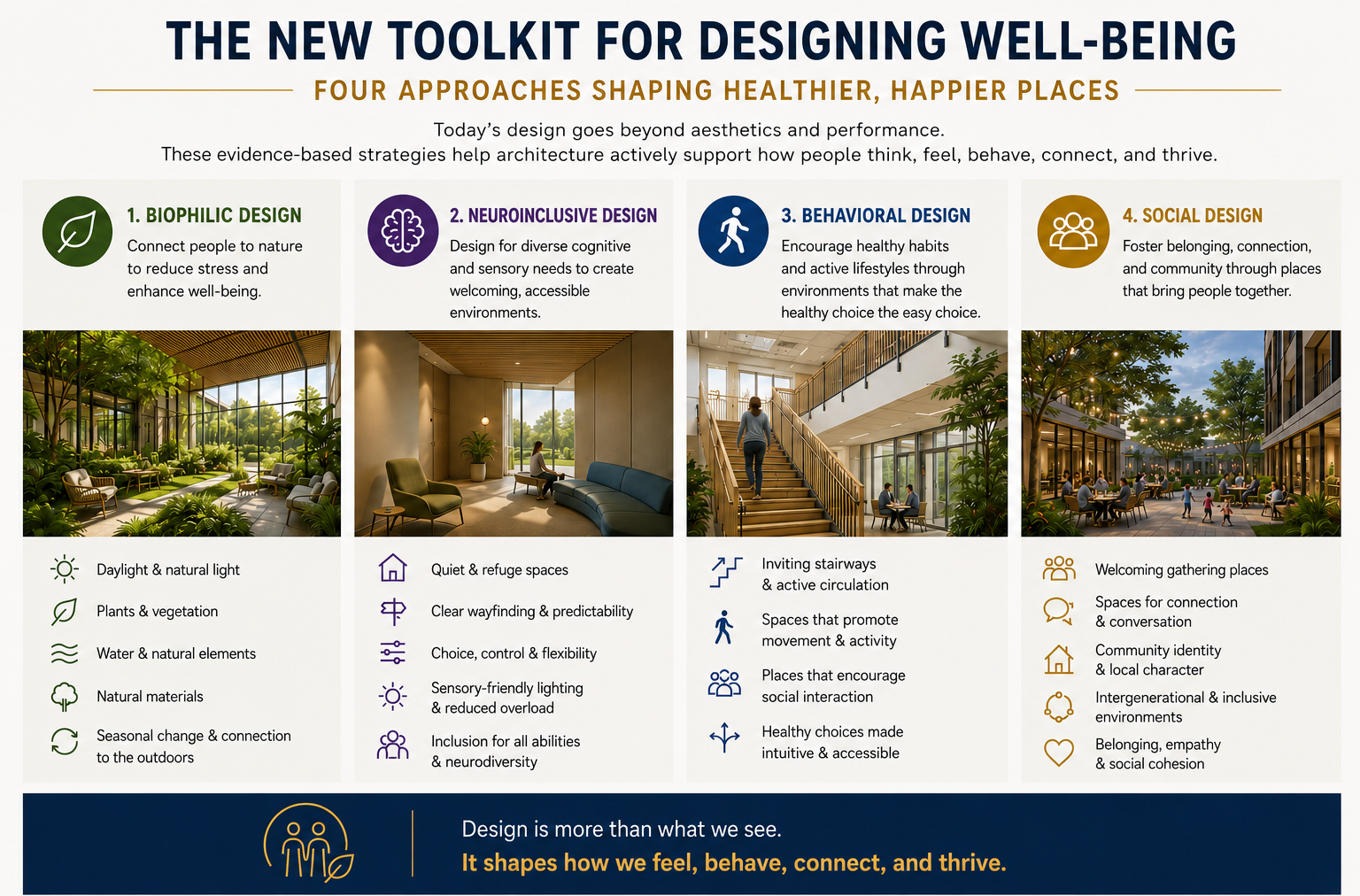
BAR Infographic
Together, these approaches demonstrate that architecture and interior design can influence not only how buildings function, but also how people feel, behave, connect, and thrive.
Designing Well-being in Practice
While the terminology may be new, many of these principles have long informed BAR's work across diverse project types.
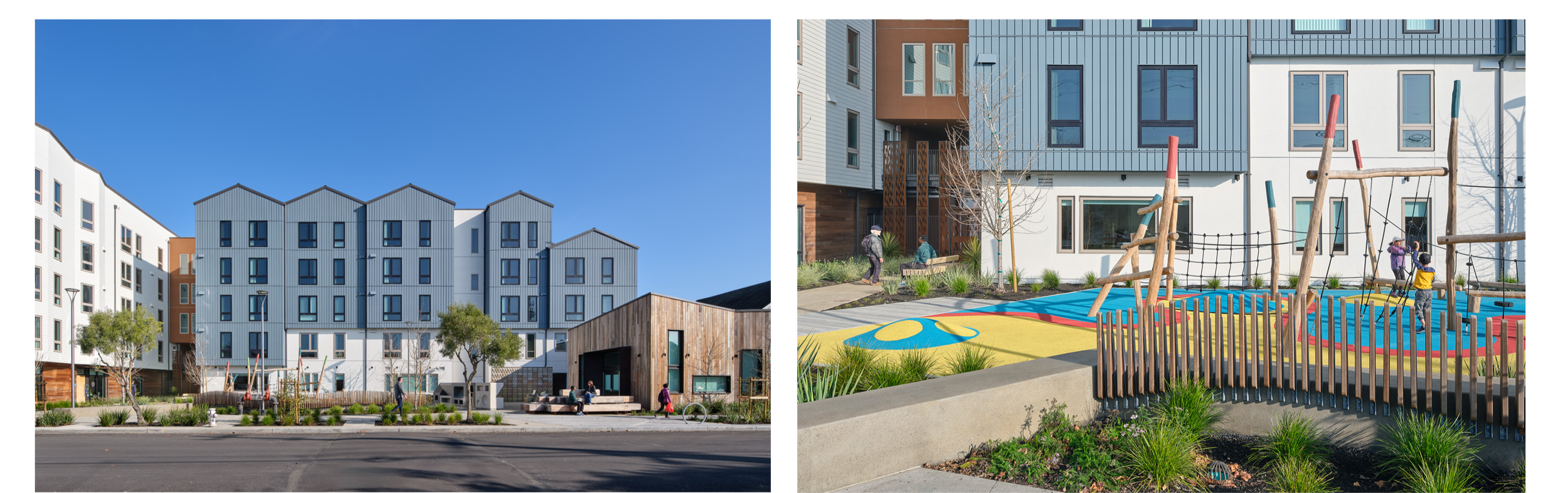
BAR’s Shirley Chisholm Village, designed for MidPen Housing and the San Francisco Unified School District, extends its front yard into the neighborhood, creating a welcoming playground where local children can play and the neighbors can connect.
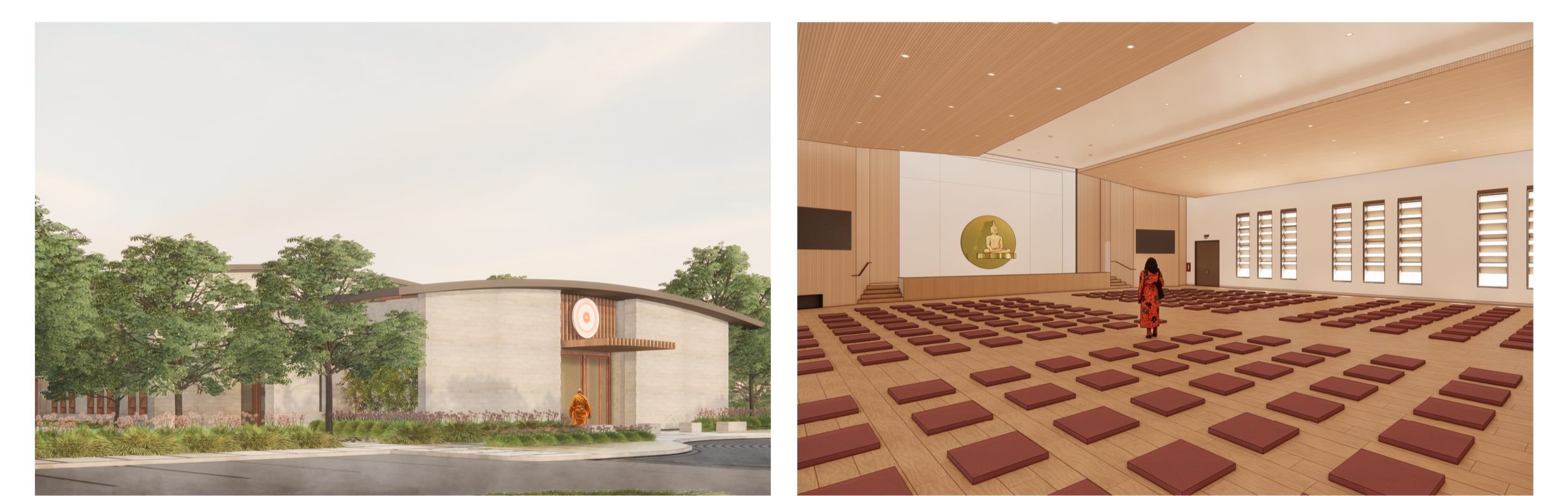
At the Dhammakaya Meditation Center of California, architecture supports mindfulness through intuitive movement, natural materials, and spaces for quiet reflection.
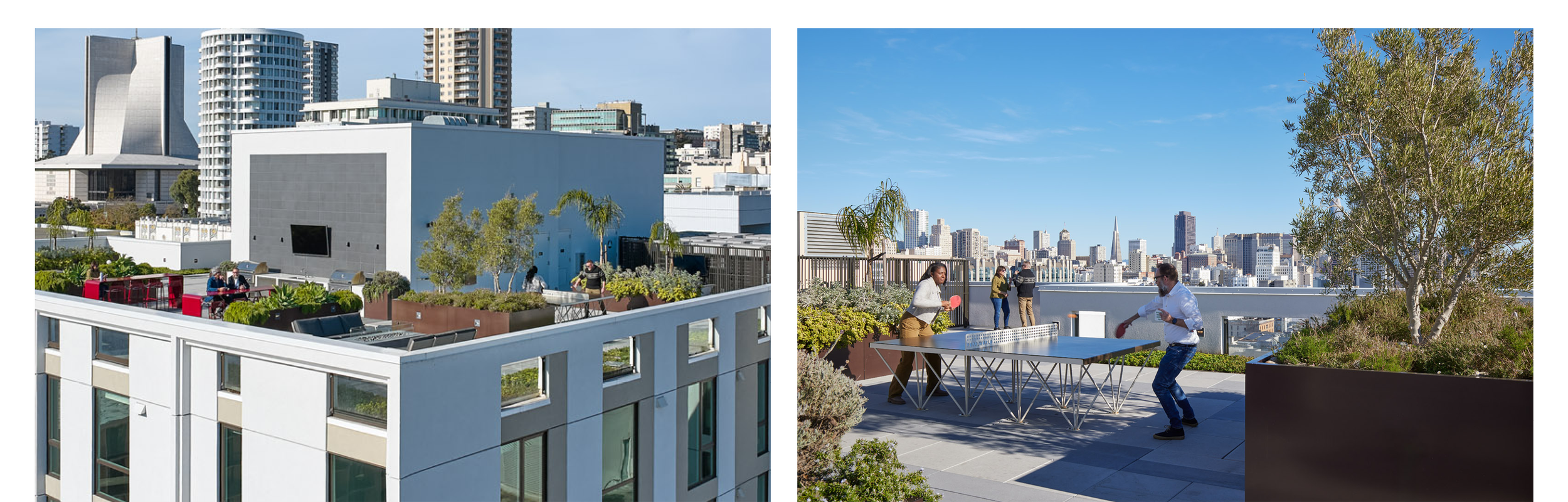
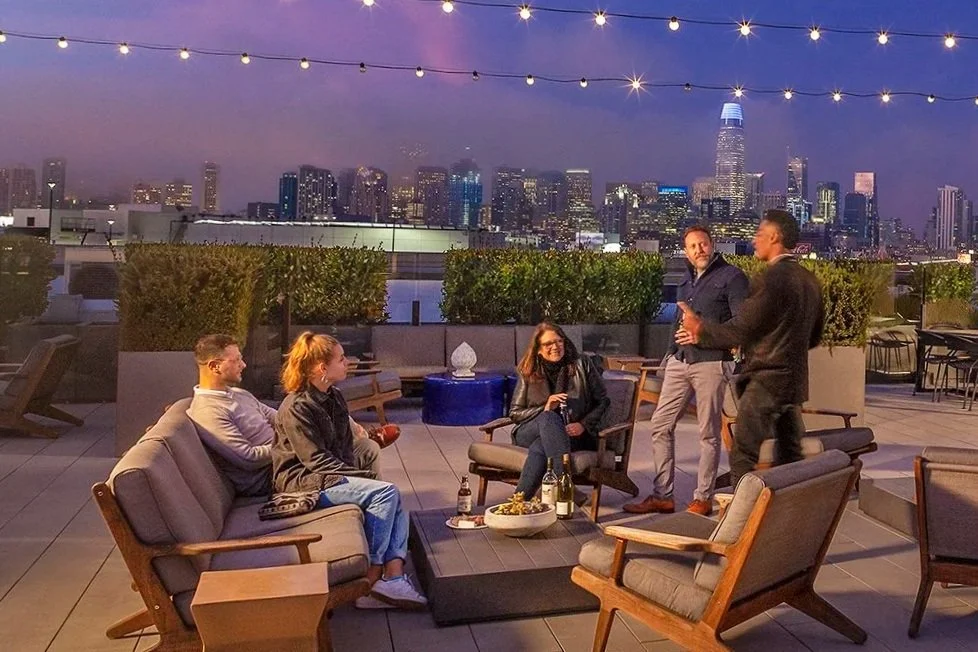
Designed to fit seamlessly within its historic context, 830 Eddy Street offers a rooftop for outdoor activities and shows how high-density housing can support vibrant, people-centered urban living.
What This Means for BAR
Design for Well-being is not a departure from successful architecture and interior design. It is an evolution in how excellence is defined by supporting the people who experience it.
For BAR, this reinforces a philosophy that has guided the practice for decades: creating places that are deeply rooted in people, thoughtfully connected to context, and designed to enrich daily life.
Across residential, hospitality, education, workplace, and mixed-use environments, we continue to explore how design can strengthen communities, support healthier lifestyles, and create lasting value for our clients.
If you're exploring how these principles could shape your next project, we'd welcome the opportunity to start the conversation.